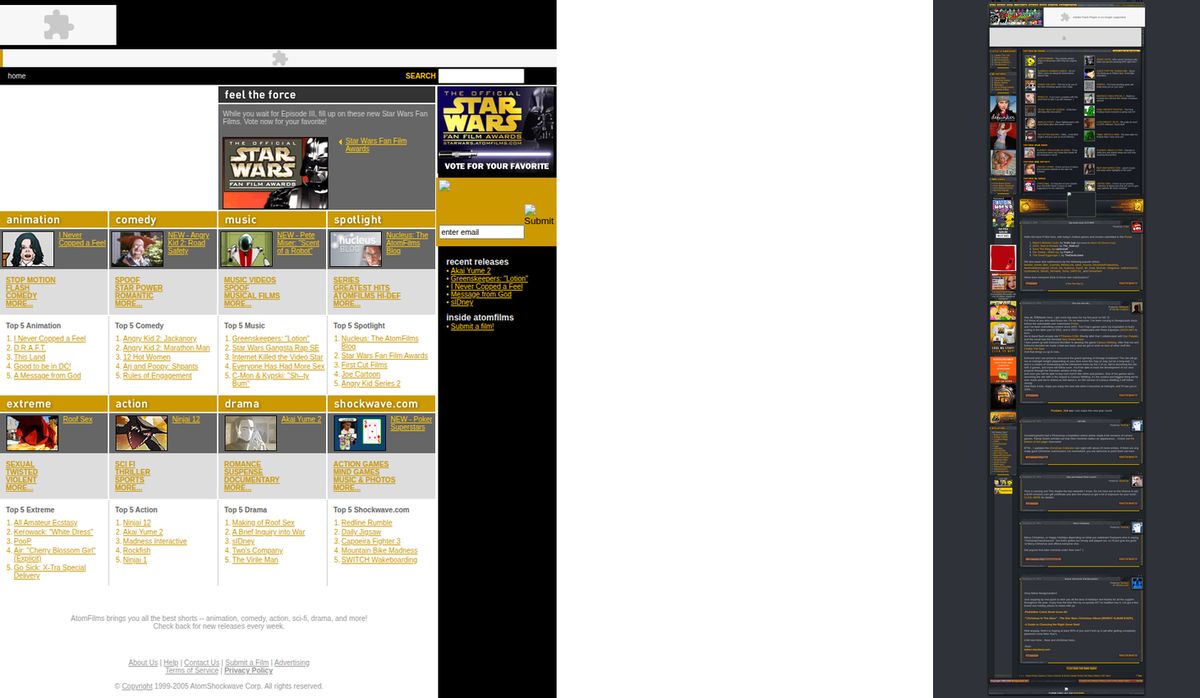
To understand what Jonathan did, you have to understand what the internet was like when he did it. For the first three years of Talking With Jon, there was no YouTube. It did not exist. The site launched in 2005, and it did not become a household name until 2006. So before we meet his show's website, we need to tour the world it lived in: an internet where video was slow, awkward, and scattered, and where getting anyone to watch your work took real effort and a little bit of nerve.
The pipes: dial-up giving way to broadband
When Jonathan started filming in 2002, most American homes still connected to the internet the slow way. It was called dial-up: your computer literally called your internet provider over the phone line, with that familiar screeching sound, at speeds topping out around 56 kilobits per second. On dial-up, a single 40 megabyte video file could take two hours or more to download, and it tied up the phone line the whole time. Nobody was calling you while you downloaded a video. Broadband, the always-on, much faster kind of connection, was spreading through cable modems and upgraded phone lines, but it was not yet the norm.
Surveys from the Pew Internet Project trace the handoff. Among Americans who went online from home, about 35 percent had broadband in December 2003, 42 percent by May 2004, half by December 2004, and 53 percent by May 2005. Broadband passed dial-up right in the middle of Jonathan's show. By 2007, roughly 47 percent of all Americans had home broadband. So Talking With Jon lived through the exact transition: it started in a dial-up world and ended in a broadband one. Every year, video got a little more watchable for a little more of the audience. You can see it in the archive itself. The early episodes survive as tiny, low-resolution files built for slow connections. The later ones survive as full-quality masters.
If you lived through dial-up, you remember the texture of it. The connection tied up the phone line, so if someone picked up the phone in the kitchen, your download died. A big file downloaded overnight, and you went to bed hoping nobody would call. If it failed at 96 percent, you started over. Watching a video that streamed, in the rare cases streaming worked at all, meant watching a little spinning icon while the picture froze, stuttered, and froze again, a ritual everyone old enough remembers by a single word: buffering.
Watching meant downloading first
Today you tap a video and it plays. Then, there was almost no such thing as streaming, video that starts playing as it loads. You clicked a link, waited while the whole file downloaded, and then played it in a separate program: Windows Media Player, RealPlayer, or QuickTime. And sometimes the file would not play at all, because your computer was missing the right "codec," the software that decodes a compressed video file. Asking your audience to download a codec before they could watch your show was like asking them to install a special lens before they could read your book. Some did. Many did not bother. Every creator learned to dread the same message from a would-be viewer: "it won't play." Sometimes the fix was a different format. Sometimes it was a twenty-minute troubleshooting session over instant messenger with a stranger. Sometimes the viewer just gave up, and you never knew.
The alphabet soup: .mpg, .avi, .wmv
Video files in this period came in several competing formats, and careful creators released the same video in more than one, hedging their bets. Jonathan's archive preserves exactly this mix, which is one of the ways we know how he worked.
MPEG-1, or .mpg, at VCD quality. A Video CD, or VCD, was a way to put video on a standard compact disc, popular before DVD burners were common. The resolution was 352 by 240 pixels, tiny by today's standards. A modern phone screen is roughly ten times wider. But the files were small, they downloaded in reasonable time, and they played on almost anything. This was the everyday workhorse format.
.avi with DivX. AVI is a container format. Think of it as the box the video comes in; DivX was the compression method inside the box, popular in the early 2000s because it gave much better quality at similar file sizes. Creators who cared about quality often released a DivX version alongside a smaller one. It was especially popular on file-sharing networks.
.wmv, Windows Media Video. Microsoft's format, playable in Windows Media Player, which came with every copy of Windows. No extra download needed. Easy for the viewer, which is why so many creators, Jonathan included, offered it.
The variety is itself a historical fingerprint. Before one standard, YouTube's web player, unified everything, creators offered several versions of the same video and let the viewer pick the one their computer could handle. Every format was a small act of hospitality toward a stranger's computer.
Sending video was expensive
Here is the part that surprises people. Putting video on your own website cost you money, and not just a little. Web hosting, renting the server space your site lived on, was priced partly by bandwidth: how much data your visitors downloaded. A popular video could cost the site owner real money. Around 2005, moving a single gigabyte of video cost roughly a dollar and forty cents. That sounds small until you picture hundreds of strangers downloading your files. A creator who got lucky could get a bill for it.
This is why creators kept files small and low-resolution, why episodes were compressed hard, and why free video-sharing sites were such a revolution when they arrived. It is also why a kid's personal site was both the cheapest and the most expensive option at once: free to set up, costly if anyone actually watched.
Put numbers on it and the squeeze becomes vivid. Say your episode is a modest 40 megabytes, small enough to download in reasonable time on a decent connection. If 500 people download it, that is 20 gigabytes of data leaving your server. At roughly a dollar forty per gigabyte, your little show just cost you around 28 dollars for one episode, and that is before the other 33 episodes anyone might click. For a teenager, that was real money. So you compressed harder. You split episodes into parts. You begged friends with faster connections to host mirrors. Or you simply accepted that only a small audience could be served, and you made the show for them.
The disc in the envelope
There was one more distribution channel, and it deserves its own moment, because it is the one Jonathan used first. You could burn the video onto a CD or DVD and hand it to someone, or mail it. A Video CD, VCD, played in many DVD players and computers, which made it the era's great equalizer: no download, no codec hunt, no bandwidth bill, just a disc. The catch was the labor. Every copy took a blank disc, burn time, and a trip to someone's house or a stamp. It did not scale. But for a show whose audience was your friends, it was perfect, and it is how the first years of Talking With Jon traveled.
Where video lived: the early sites
There was no single video site. Instead the internet had a scattered mix, each with its own character. A quick tour, in order:
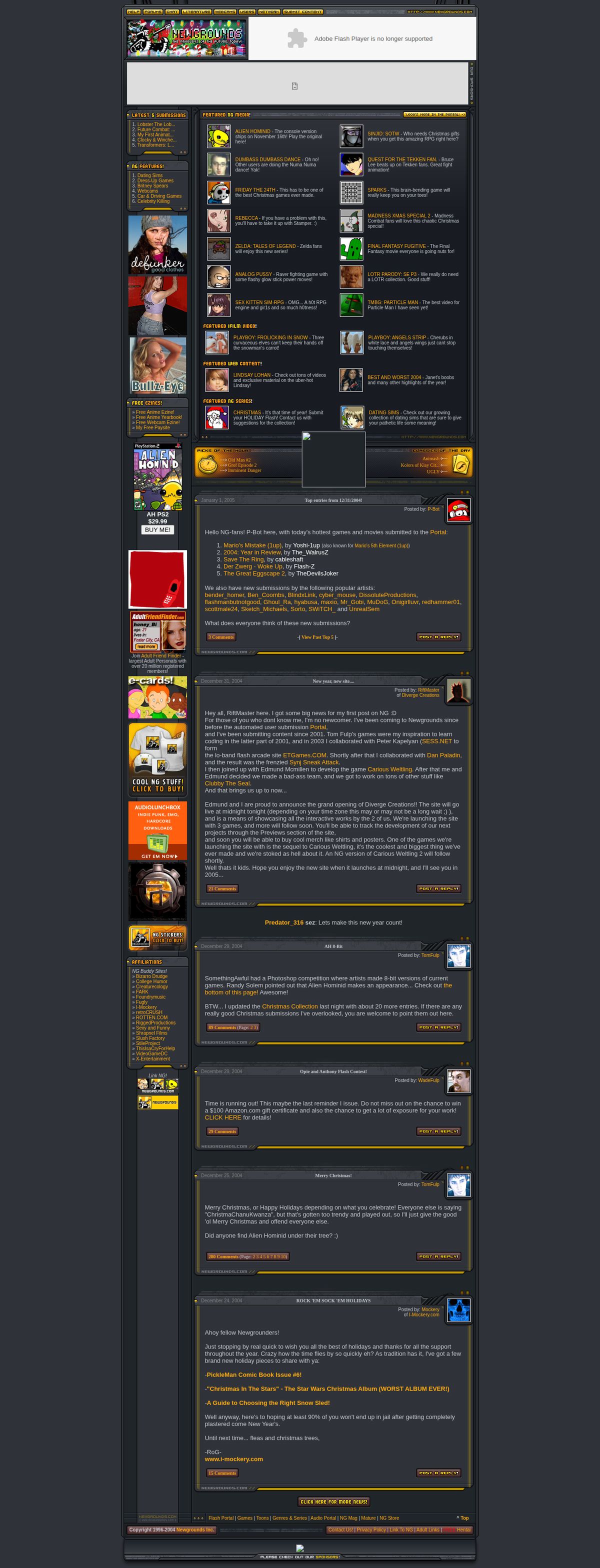
Newgrounds (1995). Founded by Tom Fulp, it was the big home of Flash animation, short cartoons made with Macromedia Flash, the software that powered most internet animation and games of the era. Its community judged every submission, and low-rated ones were deleted, a process called getting "blammed." If you drew cartoons, Newgrounds was your world. If you shot video with a camcorder, it was not really for you. Jonathan's live-action show sat outside its walls.
ShareYourWorld (circa 1997-2001). Often described as the first true video-sharing website. It proved the idea could work, then folded under the same bandwidth-cost problem described above, years before YouTube proved it again with better timing and deeper pockets.
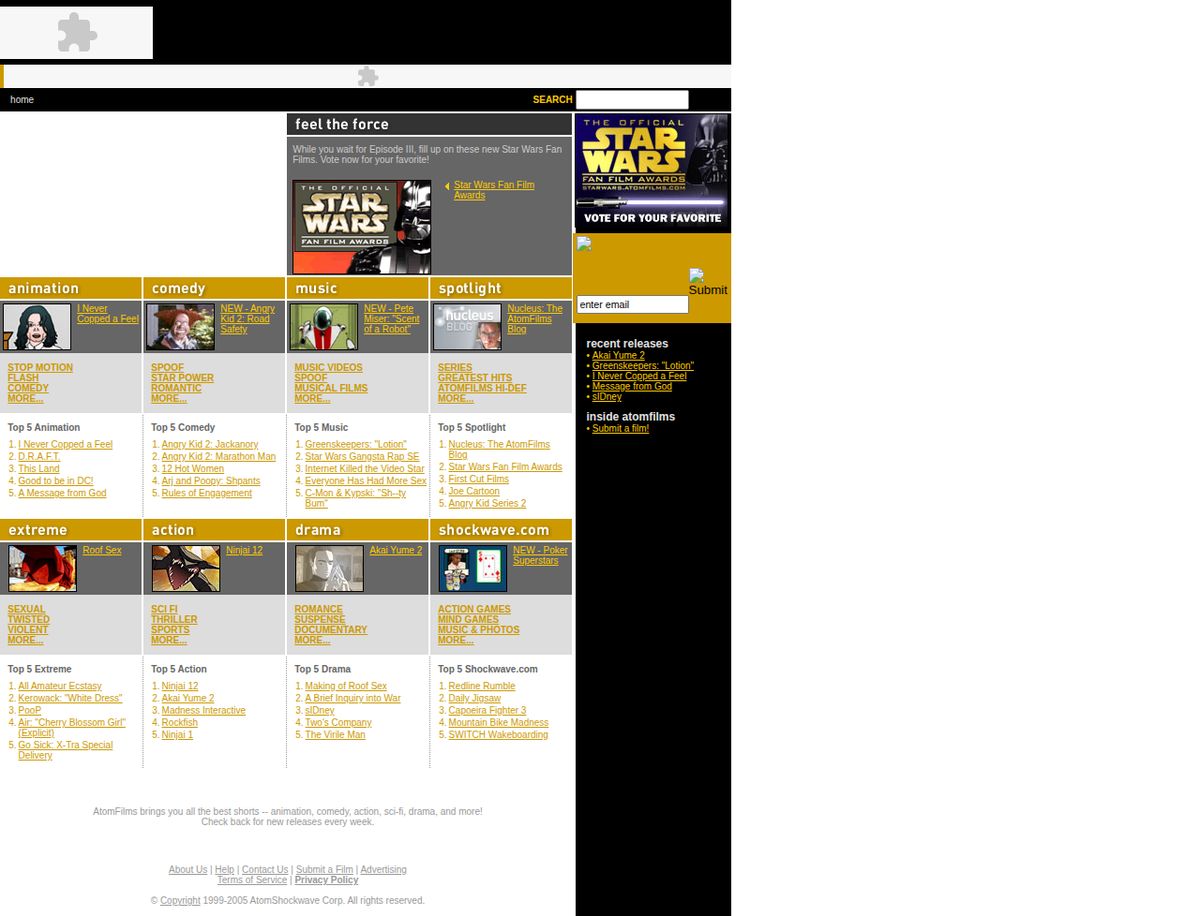
Atom Films (1998). Founded in Seattle, a curated short-film site run more like a film festival than an open platform. You submitted work and hoped to be accepted. It hosted early online work by future Oscar winners. A 13-year-old in Pittsburgh was not its audience, but it was the model of what "serious" internet video looked like, the model YouTube would later replace.
iFilm (1997). A popular site for short films and funny clips, eventually bought by MTV in 2005. More open than Atom Films, but still a destination you had to seek out, not a place where a kid built a following.
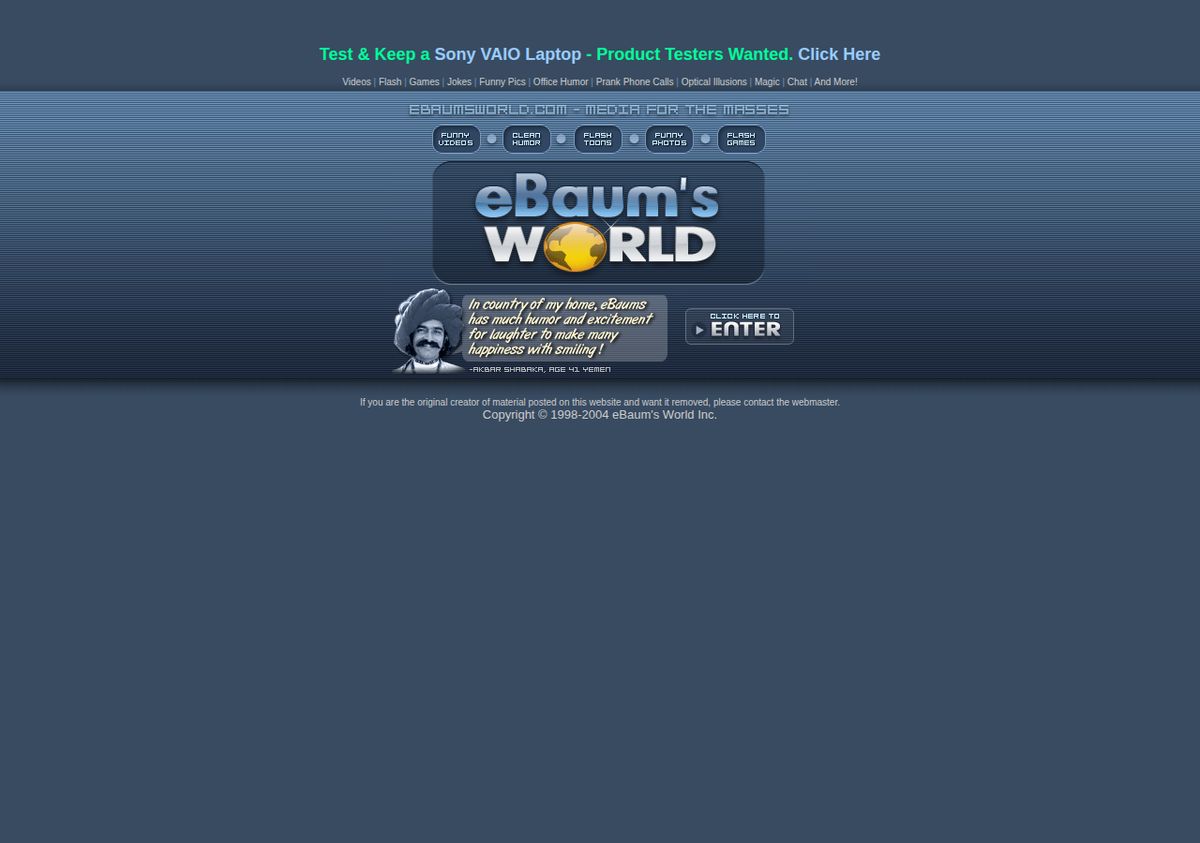
eBaum's World (2001). Created by Eric Bauman in Rochester, New York, one of the original homes of internet video, notorious for taking videos from other people's sites and posting them without credit, stamped with the eBaum's logo. It proved that "viral video" existed before YouTube. But it was an aggregator, not a place where a creator would choose to publish an original series. It collected other people's work rather than publishing its own.
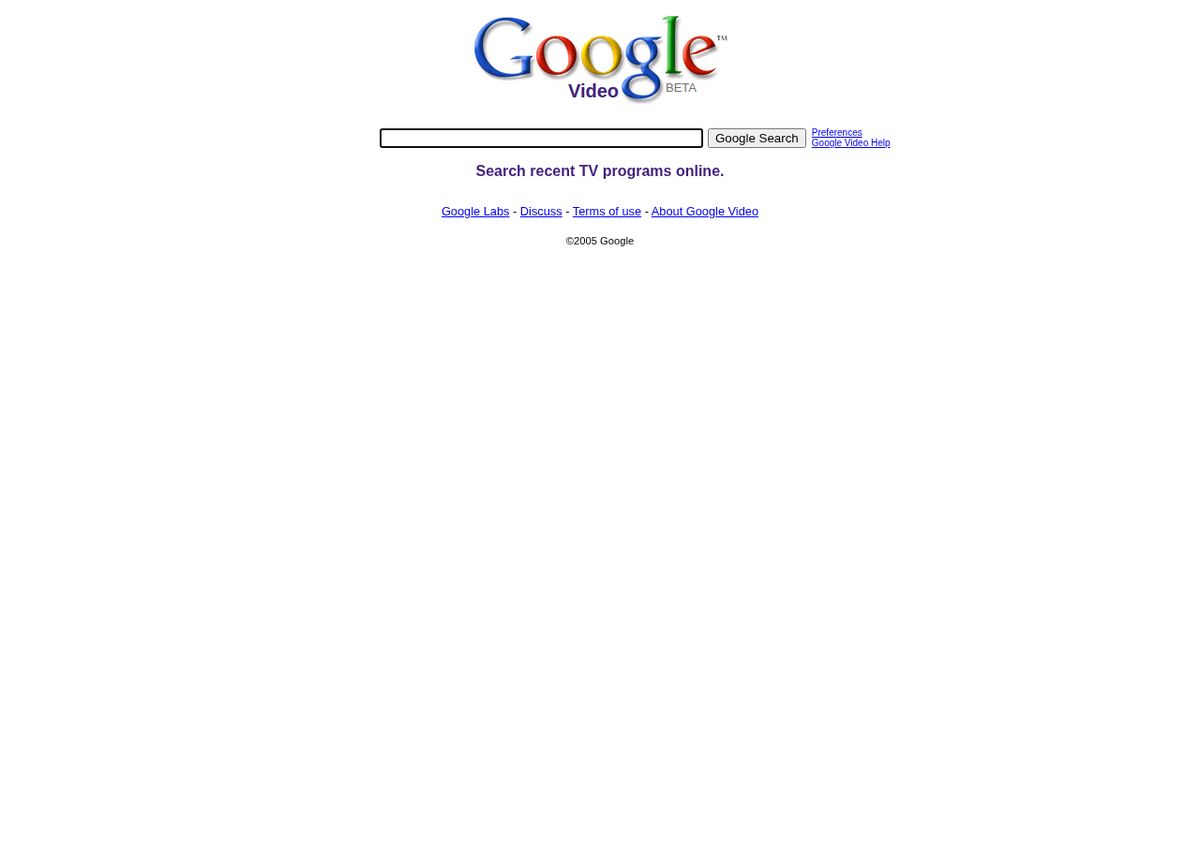
The 2003-2005 wave. Metacafe (2003), Vimeo (2004), Dailymotion (2005), and Google Video (January 2005). These were true upload-it-yourself video hosts. Google Video let people upload to Google's servers but had few community features. None of them combined free uploads with an audience already gathered in one place.
YouTube (2005). The domain was registered on February 14, 2005, by three former PayPal employees. The first upload, a 19-second clip of one founder at the zoo, went up April 23. The site opened to the public that December, and a bootlegged "Lazy Sunday" sketch from Saturday Night Live was the moment most Americans first heard of it. Google bought it in October 2006 for 1.65 billion dollars. The revolution was not hosting video; others did that. It was hosting plus a gathered audience plus a player that just worked, all free.
How people found videos at all
There was no recommendation algorithm and no search engine that searched inside videos. Discovery ran on word of mouth. People emailed links to friends, dropped them into forum posts and instant-messenger chats, and linked their sites together in chains called webrings, so browsing one led you to the next. Aggregators and "best of" sites surfaced clips. Getting featured on one could mean real traffic, but those sites were gatekeepers, not open platforms.
And viral video? It existed, but it traveled differently, and nobody could measure it. The two famous examples both date from Jonathan's era. In 2003, a Canadian teenager's homemade lightsaber video, filmed with a golf-ball retriever, was posted by classmates without his knowledge and spread around the world; it became known as Star Wars Kid. In 2004, Gary Brolsma's webcam lip-sync, Numa Numa, was passed from inbox to inbox until it was one of the most-watched clips on the early internet. These spread by email forwards, instant-messenger links, forum posts, and direct downloads. There was no share button and no view counter. Creators usually had no idea how many people had watched.
Notice something about those hits: they were almost always one-off clips, and mostly accidents. A deliberately sustained episodic series was the rare thing. Which is exactly what our kid in Pittsburgh was making.
The personal website as broadcast tower
In this period, a personal website meant something more load-bearing than it does now. You built it yourself, usually by hand in HTML, the code web pages are written in, and it was your only broadcast tower. There were no profiles, no feeds, no followers. Just pages.
Free web hosts like GeoCities and Angelfire would host your pages for nothing. Creators worked around the bandwidth problem with the tools the era offered: guestbooks where visitors left comments, simple poll scripts, an email address for direct contact, and webrings. Without comments or likes, creators invented their own interactivity. Contests, votes, email entries. This was the pre-YouTube version of audience engagement: you had to build the participation system yourself, by hand, because no platform provided one.
Forums: where strangers gathered, and the price of admission
Before social media, strangers gathered on forums, also called message boards: topic-based discussion sites, each with its own culture and rules. Some were general, like Something Awful and Fark. Most were about a hobby, like PbNation, the paintball forum.
Forum culture had a specific attitude toward outsiders. A brand-new account dropping a link to its own video looked like advertising, and the regulars treated it that way. The standard reaction was suspicion or open hostility. Getting called a spammer was practically a rite of passage for a young creator. Everybody who tried to promote their work on a forum in 2004 or 2005 has a story like the one you are about to read in the next chapter. Jonathan's version happens to be the best-documented one we have.
So here is the landscape, all in one frame. Slow pipes getting faster. No single video site. Watching meant downloading. Sending video cost money. Discovery ran on word of mouth. Forums were the town squares, and they did not like strangers selling things. Into this world walked a 16-year-old with a camcorder, a show on its 27th episode, and a plan he had built entirely by himself.