
Shooting the footage was only half the job. The other half happened after the camera stopped, in the family computer, in a program called Ulead VideoStudio. If the camcorder was the instrument, the editing program was the workshop where the instrument's raw material got turned into a show. Thirty-four episodes of Talking With Jon were cut on that program, on that computer, by the same person who had shot and performed them. And when the editing program could not do what he wanted, he reached for a second program, Ulead 3D Production Studio, and pushed it into doing things it was never meant to do. This chapter is about the cutting, the mistakes he left in, the cartoons he built out of a title program, and the lifelong habit hiding underneath all of it: making the file fit.
Cutting, explained from zero
Here is what editing meant in practice, for readers who have never done it. Imagine a long table. On the table you lay out every clip you shot, in the order you want the audience to see them: the intro, the monologue, the interview, the song, the outtakes. That table is the timeline. Cutting is deciding where each clip starts and ends, and what sits next to what. A cut is the instant one clip stops and the next begins. A title is text laid over the picture: the show's name, a guest's name, a joke caption. A transition is the bridge between two clips, a fade, a wipe, a spin. That is the whole craft, and it is enough to build television with.
Now imagine doing all of that with a mouse, on a family computer, in the mid-2000s, with footage that had arrived through the unreliable FireWire cable from the previous chapter. The computer was slow by today's standards. Previewing an effect meant waiting. Rendering the finished episode, turning the timeline into a single video file, could take a long time, during which the computer was busy and you were not doing anything else on it. He learned the editor's patience to go with the shooter's patience: set up the timeline, walk away while it renders, come back and check.
What he cut on that timeline was everything. The multi-character scenes from Chapter 15 were assembled there, two monologues sliced and interleaved into a conversation. The episode structures, cold open, monologue, sketches, songs, fake commercials, outtakes, credits, were laid out there. The title cards, the lower-third captions, the ending cards reading "See more at www.talkingwithjon.com," all built and placed in the same program. Watching the episodes in order, you can feel him getting faster and more confident with the tool: the cuts get tighter, the graphics get more ambitious, the episodes get longer. The timeline was his second set, and he learned to build on it the way he had learned to build on the first one.
A recreation-style illustration of a timeline editing interface from the mid-2000s era, labeled simply: clips on tracks, a cut point, a title overlay, a transition. Caption notes this is an illustration of the concept, not his actual screen.
The typos, and what they mean
Watch enough episodes and you will notice the typos. They are everywhere: in title cards, in captions, in disclaimer cards. One frame shows a "For your own safty" card, misspelled, warning viewers not to try the stunts in the next clip. The archive is full of moments like it.
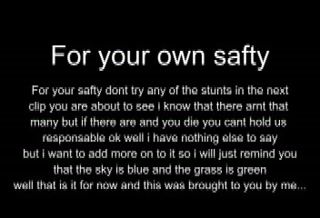
Some of the typos were on purpose. A kid making a comedy show learns fast that a misspelled word can be a joke, and he used them that way, the verbal equivalent of a pie in the face. Some of them were accidents, the honest mistakes of a teenager typing fast at midnight, building captions for an episode that had to go up. The book will not pretend to know which is which in every case, because nobody wrote it down. But the distinction matters less than what the typos have in common: they are evidence of speed.
He worked fast. Thirty-four episodes in five years, plus the specials, plus the other shows on the shelf, plus school, is a pace that does not leave room for proofreading every caption. The typos are the fingerprints of a production schedule set by one person with no staff and no deadlines but his own. Professionals have copy editors. He had himself, at midnight, rendering. The choice, every time, was between a perfect caption next week and a good-enough episode today, and he chose the episode. That is not sloppiness. That is prioritization, and it is the same prioritization that let him finish thirty-four episodes instead of perfecting four.
There is also a kinder way to read them. The typos say the show was made by a person, not a process. Every misspelled card is a small signature: a human being typed this, quickly, because he had a show to put out. In an era when video is increasingly polished by teams and tools, there is something almost warm about "safty." It is the most honest credit in the episode.
The title program that became a cartoon studio
The most Jonathan technique in this whole book belongs to the second program: Ulead 3D Production Studio.
Understand what the program was for. It was a titling tool, a piece of software meant to make three-dimensional text: spinning logos, flying words, the kind of shiny animated titles that local TV stations put over their news. You typed words, and the program rendered them in 3D, tumbling through space. That was the job. Titles.
Jonathan looked at a title program and saw a cartoon studio.
He pushed it past its intended use, coaxing 2D and 3D character animation out of software built for floating text. The results are all over the later episodes: a spinning globe animation, a Matrix-style cascade of falling numbers, animated intros with a cartoon figure lying in the road being yelled at to get up.
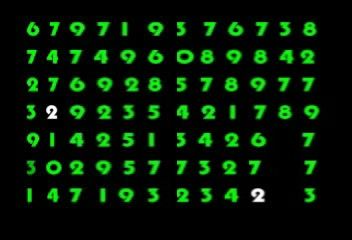
A still from the "Saving Private Edwards" cartoon pilot, clearly labeled as animation built in a 3D titling program. Caption: "A cartoon studio hiding inside a title program."
Think about what this means as a method. He did not have animation software, so he made animation software out of something else. He did not have a guest, so he played the guest. He did not have a sound guy, so he fired the one he did not have. It is the same move every time, and the title program is its purest expression: look at the tool you have, ignore what it says on the box, and find the cartoon hiding inside it. The workaround is not a lesser version of the real thing. In his hands, the workaround was the real thing.
The animation habit never left him. Years later, the same instinct drives the animated revival of Jason & Pals and the animation test for Everyday Repairs, the projects covered in Chapter 8. The tools are different now, but the move is identical: the show needs a form he cannot shoot, so he draws it instead. Saving Private Edwards was the first proof that he could.
Compression as a craft
Underneath the cutting and the cartoons ran a quieter discipline, one he never stopped practicing: making the file fit.
Every video is a file, and every file has a size, and in the 2000s the size mattered enormously. Internet connections were slow. Hard drives were small. A file that was too big could not be shared, could not be uploaded, could not be handed to a friend. So every finished episode ended with a decision: what format, what size, what tradeoff. The archive preserves the answers. The early episodes survive as VCD-era video, MPEG-1 at 352 by 240 pixels, a small, soft picture that fit on a cheap blank CD. Later episodes come as .mpg, .avi, and .wmv files, each format a different compromise between quality and size, each chosen for what the audience could actually play and what the internet of that year could actually carry.
This is worth explaining plainly, because it is invisible work. A big, beautiful file that nobody can download is not a video. It is a wish. He understood that the file had to survive the journey to the viewer, and he kept learning the math of the squeeze: smaller picture, tighter compression, shorter runtime, whatever it took to get the episode out the door. The format-hopping from the previous chapter was not indecision. It was craft, applied at the very end of the pipeline, where nobody applauds it.
And it was training. The same instincts, refined over years of squeezing episodes through slow connections, are the ones he brought to the compression problems of the stunt era. Chapter 11 tells the full story of the 571-hour slideshow squeezed into 549 megabytes, but the method was old by then. He had been making files fit since he was thirteen. The slideshow was just the biggest suitcase he ever packed.
A simple visual comparison of file sizes across the eras: a VCD-era episode file, a DVD-era file, and a labeled bar showing the 571-hour slideshow's 549 megabytes against the 20-gigabyte cap it fit under. Caption: "The same discipline at three scales."
That is the complete pipeline, the whole of Part VI. One person, writing, shooting, performing, cutting, animating, compressing, uploading, promoting. The tools changed completely between 2002 and today. The method did not change at all. Press record on whatever you have. Cut it on whatever you have. Animate with the title program if that is what you have. Squeeze the file until it fits through the wire. Put it out. Then do it again. Thirty-four episodes, thousands of water videos, and everything in between, all built the same way: by hand, by one person, with the tools in the room.
[END OF PART VI]