
There is a second channel in Jonathan's directional universe that deserves its own chapter, because it shows the same mind working from a different angle. Jon Drinks Water is minimalism: one man, one glass, silence. Let's Tape It is maximalism: one man, an ordinary household object, and an unreasonable amount of tape.
The concept is exactly what the name says. Jonathan picks an everyday object and wraps it in tape. A remote control. A phone. A water bottle. He wraps it until it is a tape cocoon, smooth and absurd and weirdly satisfying. The videos are process videos, the whole pleasure being in the watching: the familiar shape disappearing layer by layer under his hands until only the taped form is left. It is the same instinct that drives a decade of water drinking, applied to adhesive: take the most ordinary action imaginable and commit to it completely.
The channel is still posting. Years after it started, Jonathan is still wrapping things in tape, still finding new objects and new tapes, still trusting that the joke never gets old if you never stop. That is the pattern with all of his series. He does not chase novelty. He picks an idea and outlasts everyone's attention span for it, including, sometimes, his own. The tape channel has the same quiet stubbornness as the water channel, just stickier.
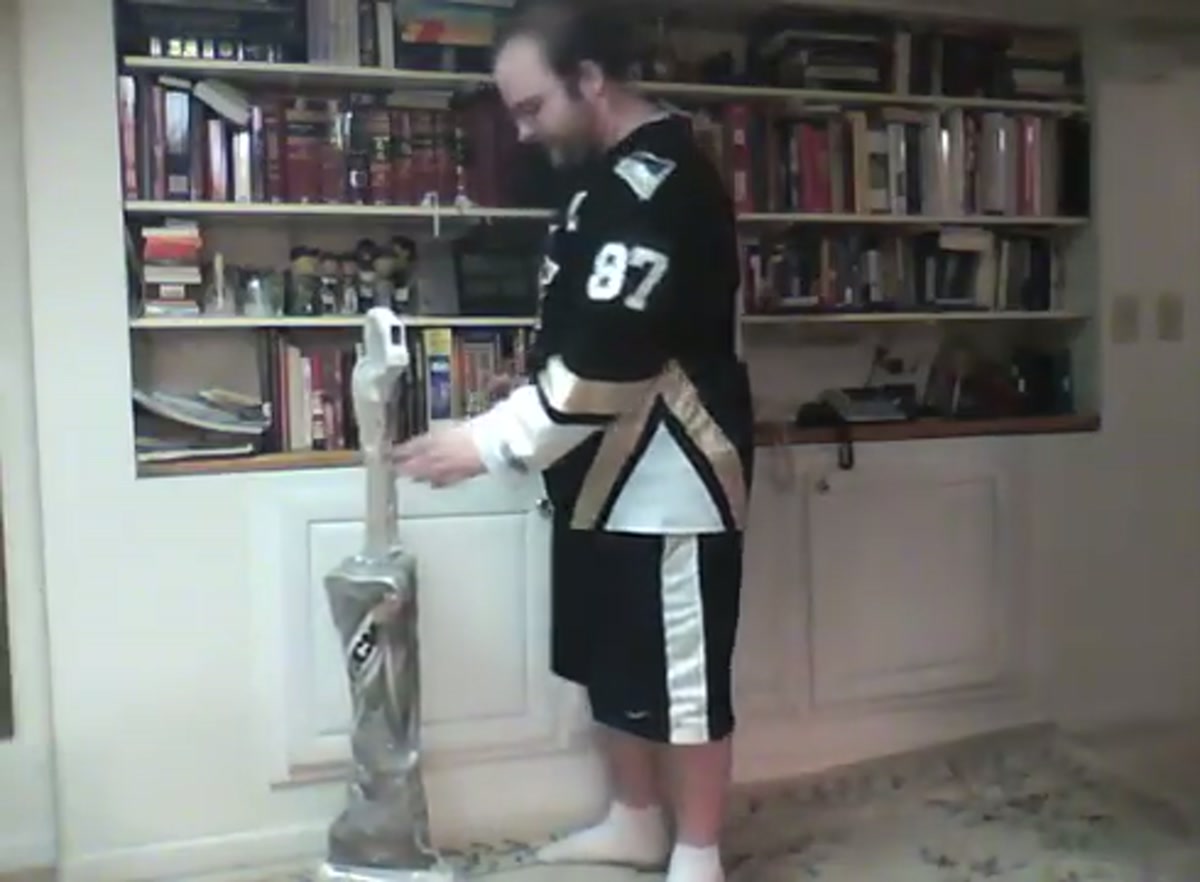
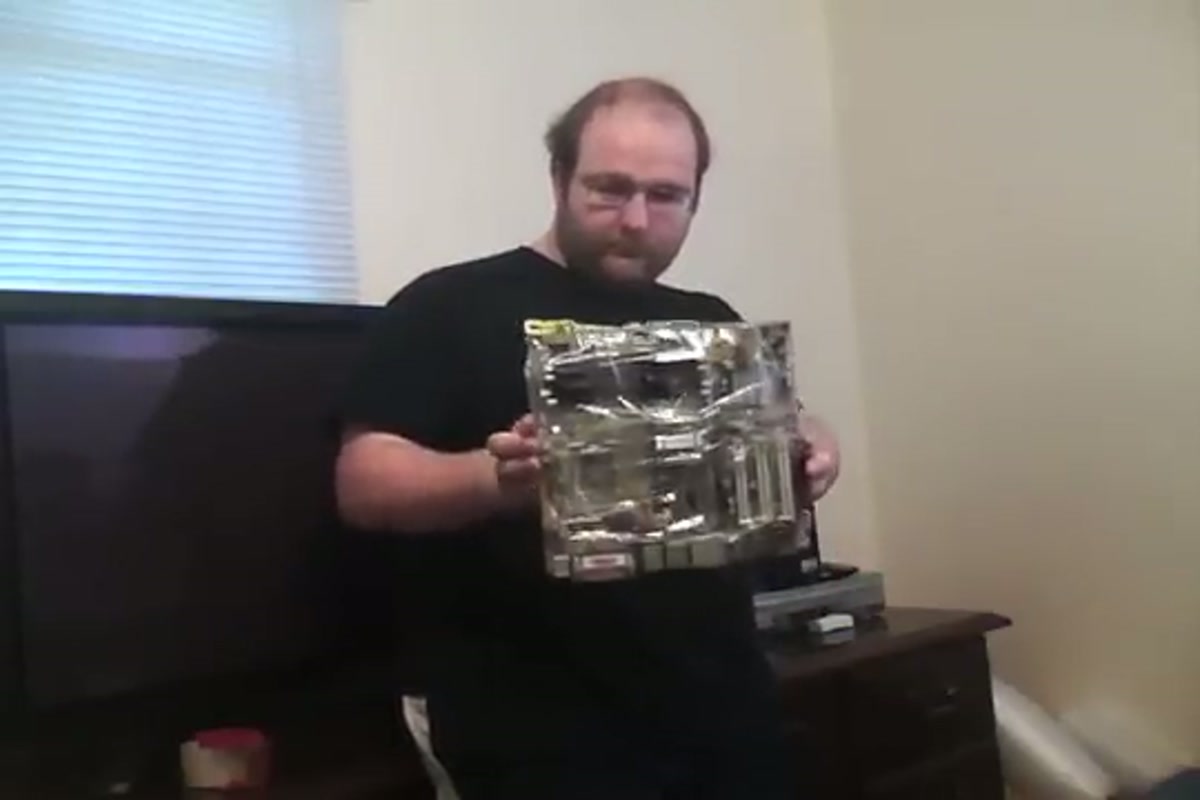
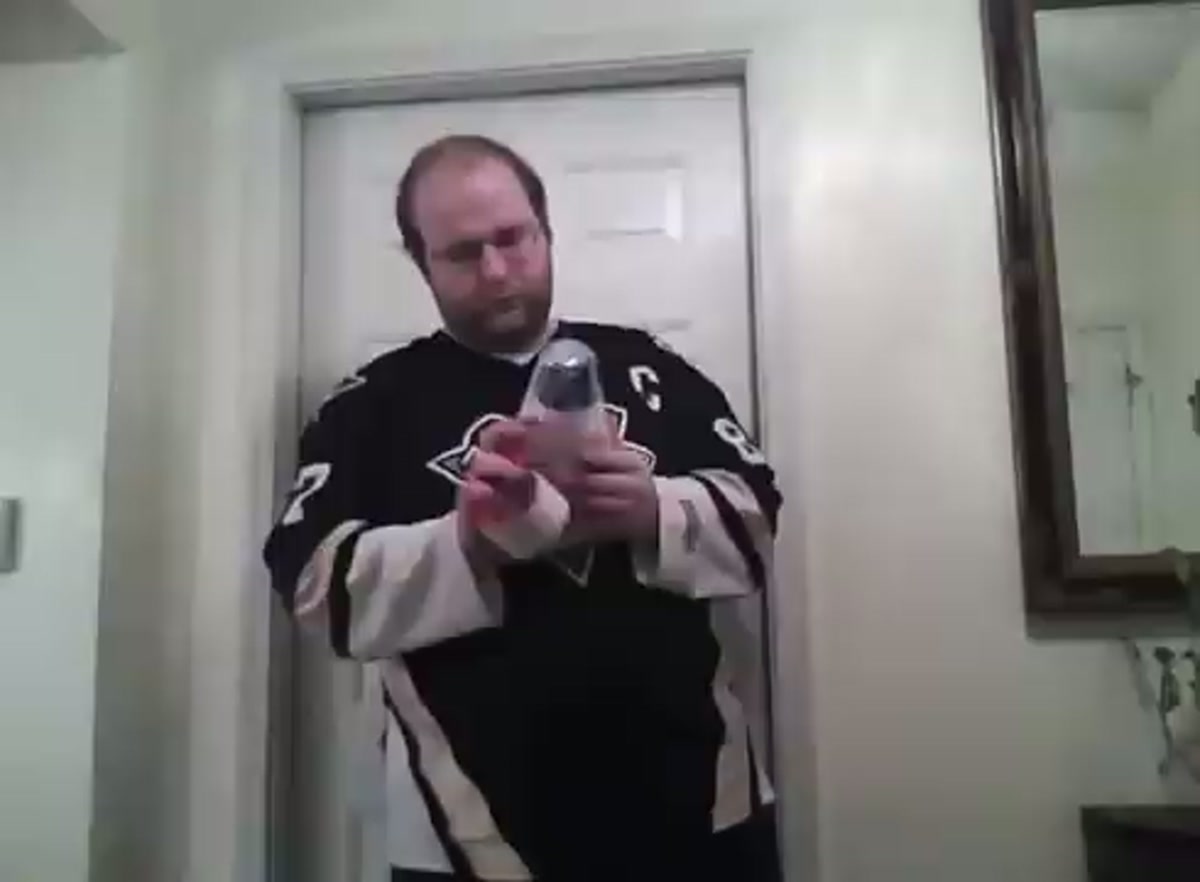
But Let's Tape It did something Jon Drinks Water never did: it got Jonathan on television. Or at least, on the closest thing his generation had to television that still felt like television.
Tosh.0 was a Comedy Central clip show hosted by Daniel Tosh, and for readers who never saw it, the format is easy to picture. Tosh stood on a stage in front of a screen, showed the audience a funny video from the internet, and spent a few minutes being clever and mean about it, in roughly equal measure. At its height it was one of the defining shows of the early social internet, the bridge between viral videos as a curiosity and viral videos as a culture. Getting featured on it meant your weird little internet thing had been noticed by the mainstream, which is both a compliment and a roast, usually in that order.
Daniel Tosh interviewed Jonathan about wrapping everyday objects in tape. The clip went up on Tosh.0's official Facebook page under the title "TBT: Daniel interviews a guy who wraps tape around everyday objects on YouTube." There it is, the whole concept of Let's Tape It, summarized by a television host for an audience of millions: a guy who wraps tape around everyday objects on YouTube. Jonathan got to sit there and explain himself to Daniel Tosh, which is a sentence that would have been unthinkable on the December day he started the water channel.
Here is what matters about that moment for this book. Long before any of this, back when Jonathan was making Talking With Jon as a teenager, he was already making fake commercials. He understood, before YouTube even existed, that a commercial is a kind of performance: thirty seconds of enthusiasm about an object, a script you believe in while you are saying it. The fake-commercial instinct was always there. Twenty years later, it came back around with real sponsors attached. The kid who pretended to sell things on camera grew up into the man who actually sells things on camera, and the only thing that changed in between was that he kept making videos for two decades.
Which brings us to the present day, because the tape story is not finished. In 2026, Jonathan did what any sensible channel owner with a tape-wrapping series would eventually do: he pitched tape brands for sponsorship. Thirteen of them. He wrote to thirteen tape companies and made the case that a man who has spent years publicly wrapping objects in tape on the internet is, in fact, a tape influencer, and that they should send him tape. One of them, Gaffer Power, answered through a man named Eric Gage, who offered to send free rolls for Jonathan to test. The reply went out. The rolls were coming. The fake commercials of Talking With Jon, the ones he made for nobody, had become real product pitches to real companies, written by a man who could point to a decade of evidence that he takes tape extremely seriously.
a still from the Tosh.0 segment with Daniel Tosh and Jonathan
The channel sits in a cultural lane that the internet eventually named: the satisfying process video. Millions of people watch paint mix, soap cut, and objects restored, not for the result but for the doing. Let's Tape It belongs to that family, except it arrived with no trend to ride and no category to file under. Jonathan was wrapping objects in tape before "oddly satisfying" was a genre with a name. He was not following a format. He was the format, one object at a time, in a room in Pittsburgh, with a roll of tape and a camera and the patience to finish.
That patience is the product, really. Anybody can wrap one object in tape. The channel is the proof that he wrapped hundreds of them, that he never got bored of the bit before the bit was done, that he treated the silliest possible premise with the seriousness of a craftsman. Viewers can feel the difference between a joke and a practice. A joke gets old. A practice deepens. The tape channel deepened.
And the audience for it overlaps with all his other audiences in a way that only makes sense once you see the whole system. On one of his livestreams, in December of 2021, the chat filled with viewers from all four channels at once: water drinkers, carrot viewers, balloon collectors, dice rollers, and Let's Tape It viewers, all in the same room, all there for the same man. The directional map on every video description is not just branding. It is a real audience that moves in four directions and meets in the middle. The tape people know the water people. The water people know the carrot people. Jonathan built four rooms and one house, and the residents visit each other.
He is still posting to Let's Tape It. That fact deserves its own sentence, because in the attention economy it is the rarest sentence there is. No viral moment sustains a channel for this long. No algorithm carried it. He kept wrapping things in tape because wrapping things in tape is what the channel is, and the channel is what he does, and he does what he says he will do. Somewhere ahead of him there is another object, another roll of tape, another video. The premise has not changed since the first one. It does not need to.
There is a version of this story where the Tosh.0 interview is the punchline: the internet weirdo gets his fifteen minutes and goes home. That is not what happened. The interview became a credential. Jonathan cites the Tosh.0 segment in his sponsorship outreach, one humble line, and it works, because "a guy who wraps tape around everyday objects on YouTube" is exactly the person a tape company should want testing its product. The joke was always the pitch. He just needed twenty years and thirteen emails to close the loop.
Let's Tape It is still going, and that may be the most Jonathan sentence in this whole book. Not "it went viral," not "it changed his life," just: it is still going. The water channel tapered after ten thousand. The tape channel keeps wrapping. Somewhere in Pittsburgh, right now, there is an object Jonathan has been looking at for weeks, and he is deciding whether it deserves the tape. That is not a bit. That is a career.
The craft of the videos is worth describing, because the concept sounds like nothing and the execution is the whole show. There is no narration explaining what is happening. You watch a familiar object, a thing you have held a thousand times, disappear under Jonathan's hands. The tape goes on in strips and wraps, the edges tuck, the shape rounds out, and what is left is a smooth, gleaming, slightly absurd artifact that is technically still the object and also completely not the object. It is the same pleasure as the water series, translated into adhesive: the ordinary made strange through sheer commitment. And like the water series, it trusts the viewer to find the fun without being told where it is.
In the directional map that Jonathan prints on every video description, Let's Tape It is Down. Four channels, four directions: Left for the water, Up for Tech Thursday, Down for the tape, Right for the carrots. It is the kind of system a person builds when he plans to be doing this for a very long time. The tape channel has never been the biggest room in the house, but it has always been one of the load-bearing walls.
To understand what the Tosh.0 moment meant, it helps to remember what the show was. Tosh.0 ran on Comedy Central from 2009 to 2020, and in the early 2010s it was one of the main ways the mainstream encountered the internet. Tosh's whole act was the ironic distance between television and the web: he showed the clip, he mocked the clip, and then, often, he brought the person behind the clip on the show and mocked them to their face, affectionately or not, while the audience decided whether the video was brilliant or ridiculous. Being featured was a rite of passage for viral weirdness. It meant your strange little corner of YouTube had crossed the border into the culture at large, passport stamped by a comedian in a blazer.
For Jonathan, the crossing had a particular sweetness. His channels had always been defiantly small and defiantly earnest: no irony, no winking, just a man drinking water and a man wrapping tape, posted with total sincerity for years. Tosh's stage was the house of irony. And Jonathan walked into it and explained himself anyway, on camera, to Daniel Tosh, about tape. The clip lived on Tosh.0's official Facebook page with the gloriously plain title "TBT: Daniel interviews a guy who wraps tape around everyday objects on YouTube," and in that title you can hear the whole internet-era collision: a television show reduced to describing a YouTube channel in the most literal possible terms, because literal was all it needed.
He never treated the appearance as a joke at his expense. He treated it as a credential, which is what it was. Long after the show ended, the interview stayed useful, because "a guy who wraps tape around everyday objects on YouTube" is a description that does exactly what a description should do: it tells a stranger what the channel is in one breath. Jonathan cites the Tosh.0 segment in his sponsorship outreach, one humble line, the way you would list a credit. It is not bragging. It is evidence. Here is the thing I do, here is a television show that noticed the thing I do, here is why your tape company should send me tape.
And the 2026 outreach is worth a closer look, because it is the fake commercials coming full circle in real time. Thirteen tape brands. Not one hopeful email to a favorite company, but a full campaign: thirteen pitches, each making the same essential case. A man who has spent years wrapping everyday objects in tape, on camera, in public, with a documented audience, is asking for tape to wrap. It is the most honest sponsorship pitch ever written, because there is no gap between the content and the product. He was already doing the ad for free. He was just asking them to supply the props.
Gaffer Power said yes, or the first yes that mattered. Eric Gage, their contact, offered free rolls for Jonathan to test, and Jonathan approved a reply asking for a real variety: standard two-inch rolls in different colors, plus narrower rolls, the full palette. Think about what that request implies. He was not asking for one roll to make one video. He was stocking a studio. He had plans for those colors. The man who wraps everyday objects in tape had opinions about which tapes, in which widths, which is the least surprising sentence in this chapter and also the most telling. He takes the bit seriously. He always has.
Think about the distance traveled: a teenager making fake commercials for imaginary products in his parents' house, twenty years later, receiving real rolls of real tape from a real company because a real person at that company watched the videos and saw the fit. The commercials stopped being fake. Nothing else about the work had to change.
The through-line from Talking With Jon to Tosh.0 to the Gaffer Power email is the through-line of this whole book in miniature. He makes the thing. He keeps making the thing. The world notices the thing, eventually, on its own schedule. And when it does, he is still there, still making the thing, with a longer track record than anyone thought the idea deserved. The fake commercials became real ones. The kid became the pitch deck. Nothing about the work changed except the letterhead.